How to give AI agents API access without provider accounts or keys
Compare direct integrations, API marketplaces, connected apps and managed catalogs for giving AI agents access through one connection.
By Scrollport
In brief
For varied specialist APIs, the lowest-overhead model is a managed provider-included catalog between the agent and individual suppliers. Direct integrations fit stable high-volume use of one provider, while connected-app infrastructure fits actions inside accounts the customer already owns. Scrollport supplies its core catalog through one agent connection and wallet without separate provider accounts.
You do not need to open and fund a separate provider account for every specialist tool an AI agent may use. Scrollport gives the agent one scoped connection to a catalog with provider access included and one wallet for pay-per-use execution. Provider credentials never need to appear in chat.
Provider-by-provider setup does not scale
A useful workflow may research companies, verify email addresses, collect social data and generate media in one task. Connecting each provider directly means researching vendors, opening accounts, choosing plans, obtaining credentials, learning different APIs and maintaining separate billing relationships.
That work continues after setup. Keys need secure storage, attribution, rotation and revocation; rate limits and error shapes differ; and providers bill in different units. The OWASP secrets-management guidancerecommends centralised storage and lifecycle control precisely because scattered bearer credentials are hard to govern.
Compare the ways to give an agent API access
| Access model | Best fit | Account and credential burden |
|---|---|---|
| Direct provider integration | Stable, repeated use of one known provider where the team wants full client control. | The team opens, funds and maintains every provider account, key and API client. |
| API marketplace | Discovering or buying APIs through one commercial directory. | The marketplace may unify billing, but provider access, quality and execution support vary by listing. |
| Connected-app infrastructure | Acting inside accounts the customer already owns, such as a CRM or workspace. | The customer authorises each app account; it does not replace specialist data-provider access. |
| Provider-included managed catalog | Giving an agent varied specialist tools without separate provider subscriptions. | The catalog operator supplies provider access, execution and one billing relationship. |
Choose by the actual job. A direct provider relationship can be efficient for one stable, high-volume workload. A connected app is the right boundary when the agent must use the customer’s existing account. For irregular work across several specialist APIs, a provider-included catalog removes the most setup and billing overhead.
Some products describe that last model as a tool router for AI agents or an “OpenRouter for tools.” The shorthand is useful only when the service really includes tool discovery, execution and consolidated access. Read the tool-router comparisonfor the difference between that product model and an MCP gateway.
Put a catalog between the agent and providers
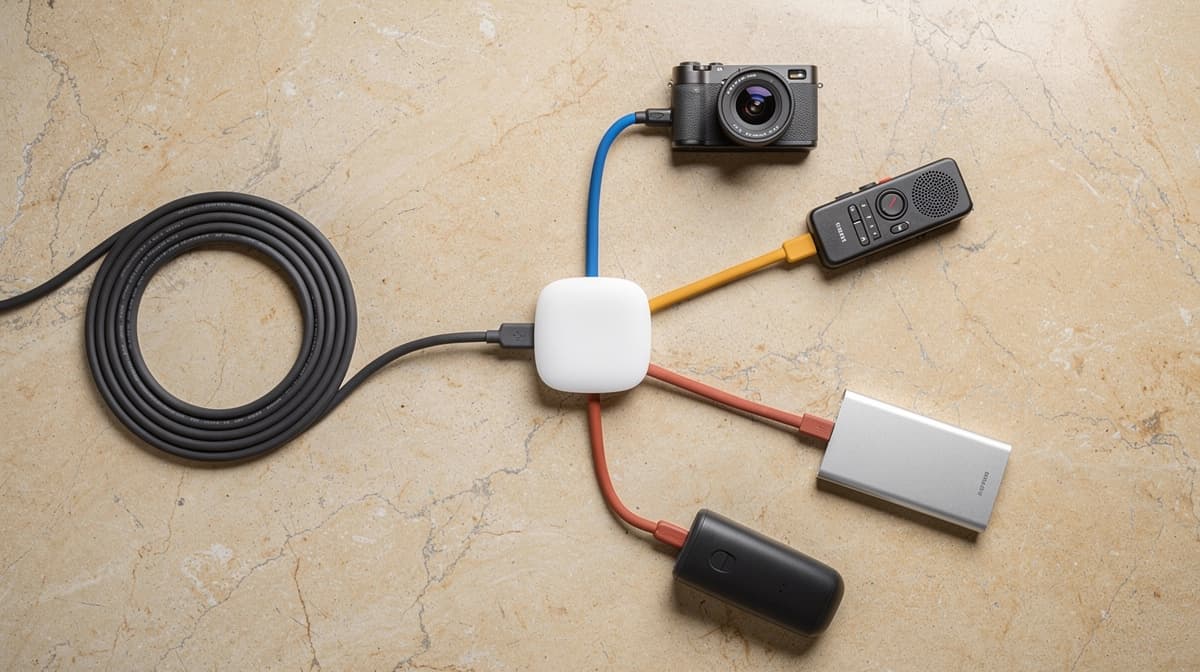
Scrollport gives an agent one connection to a catalog and one wallet for metered tool use. The agent starts from the outcome, uses search_tools to find suitable options,inspect_tool to load the current contract and run_tool to execute the chosen operation. It does not permanently load or configure every provider endpoint.
This is not one all-powerful credential. Authentication identifies the human; the pending setup or invitation selects the target workspace; and a separate authorization approves the agent connection to that workspace. A machine, harness or MCP connector stores its credential, while HTTP or MCP transports the nine control-tool calls. These decisions remain separate so authority has a real owner and can later be paused or revoked.
Ready to run is the default
Scrollport’s core catalog is Ready to run. Scrollport supplies the provider access, so the human does not need another provider account, API key or subscription before the agent can use the tool.
A smaller connected-app layer is available when a selected tool must act inside an external account the human already uses, such as a workspace or CRM. This is a convenience around the core catalog, not a second way to buy specialist provider access. The tool is clearly marked and the human authorizes the app through the connected-accounts flow. An agent connection never silently authorizes an external account, and connecting an account never widens an agent’s Scrollport authority. Authorise once through Scrollport so your agent does not need a provider API key or OAuth token in its prompt, configuration or logs.
Keep credentials out of the conversation
During setup, the credential should travel directly to the software that will hold it. The CLI stores it on the persistent machine, a programmatic harness places it in its existing secret store, or an MCP client retains OAuth tokens for its connector. The human approves the request in a browser but is not asked to copy a raw secret into chat.
The OAuth device authorization flow formalises this pattern for clients that use a separate browser interaction. In RFC 8628, the client shows a short code while it polls for the human’s decision; authorization and secret delivery remain distinct. Scrollport uses the same principle for CLI and direct-API setup.
A practical setup sequence
- Give the agent the neutral setup instructions at scrollport.com/start.
- Let it choose CLI, direct API or remote MCP from the environment rather than asking the human to interpret a technical picker.
- Complete the separate browser approval and confirm the displayed code or connector details.
- Verify the connection with the free
get_walletorsearch_toolscontrol tool. - Set human-controlled wallet limits before the first paid run.
- Connect an external account only when the selected tool explicitly requires it.
The outcome is one attributable and revocable agent connection, not a pile of provider secrets. Read the connection guide, compare MCP, CLI and direct API, or browse the live catalog.